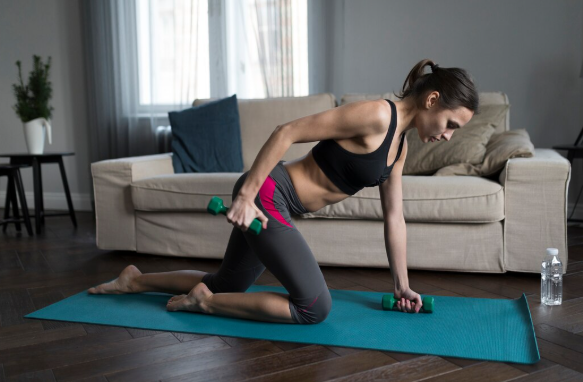
Building a consistent movement routine does not require complicated equipment or long gym sessions. A simple collection of 7 exercises to do everyday can help you stay active, improve mobility, build functional strength, and support overall fitness. The best daily exercises are generally movements that can be adjusted to your fitness level and performed without exhausting the same muscles every day.
A balanced routine should combine strength, mobility, balance, and light cardiovascular movement. It is also important to remember that not every exercise needs to be performed at maximum intensity. Some movements are better suited to gentle daily practice, while demanding strength exercises should be rotated to allow adequate recovery.
Why Daily Movement Matters
Regular physical activity provides benefits for physical and mental well-being. For adults, general activity guidelines recommend at least 150 minutes of moderate-intensity aerobic activity each week along with muscle-strengthening activities on at least two days. This does not mean that every day needs to be a hard workout.
Daily movement can include walking, mobility exercises, bodyweight movements, stretching, and other activities that keep you from remaining sedentary for long periods.
A consistent routine can help support:
- Cardiovascular fitness
- Muscle strength
- Joint mobility
- Balance and coordination
- Healthy body composition
- Everyday movement ability
- Sleep quality
- Mood and stress management
The goal is to make movement a sustainable part of your lifestyle rather than treating exercise as something you only do occasionally.
The 7 Exercises to Include in a Daily Routine
The following movements cover several major areas of fitness. Beginners can start with fewer repetitions, while more experienced exercisers can increase repetitions or use resistance.
| Exercise | Primary Focus | Beginner Starting Point |
|---|---|---|
| Walking | Cardiovascular fitness | 10–20 minutes |
| Bodyweight squats | Legs and hips | 8–15 reps |
| Push-ups | Chest, shoulders, arms | 5–12 reps |
| Glute bridges | Glutes and hips | 10–15 reps |
| Plank | Core stability | 15–30 seconds |
| Bird dog | Core and balance | 6–10 each side |
| Mobility stretches | Flexibility and movement | 5–10 minutes |
These exercises can be modified to suit different abilities.
1. Walking
Walking is one of the simplest ways to add more physical activity to your day.
You do not need a treadmill or special equipment. A brisk walk outdoors, around your neighborhood, or even indoors can contribute to your overall activity level.
How to Do It
Start at a comfortable pace and gradually increase your speed if appropriate. For moderate intensity, you should notice that your breathing and heart rate increase while you can still carry on a conversation.
Try:
- 10 minutes for a beginner session
- 20–30 minutes for a longer session
- Short walking breaks throughout the day
Walking is also useful as a warm-up before strength exercises.
Why Walking Is Useful
Regular walking can improve cardiovascular endurance and help reduce the amount of time spent sitting. It is also relatively easy to adjust according to your fitness level.
2. Bodyweight Squats
Squats train the lower body and mimic movements used in everyday activities such as sitting down, standing up, and lifting objects.
How to Perform a Squat
- Stand with your feet approximately shoulder-width apart.
- Keep your chest comfortably upright.
- Bend your knees and push your hips backward.
- Lower yourself as far as you can comfortably control.
- Push through your feet to return to standing.
- Repeat with controlled movement.
Start with 8–15 repetitions.
If standard squats are difficult, use a chair for support. Sit back toward the chair and stand again while maintaining control.
Progression
Once bodyweight squats become easy, you can increase repetitions or eventually add resistance.
Avoid sacrificing technique simply to perform more repetitions.
3. Push-Ups
Push-ups are a convenient upper-body exercise that works the chest, shoulders, arms, and core.
Beginner Modification
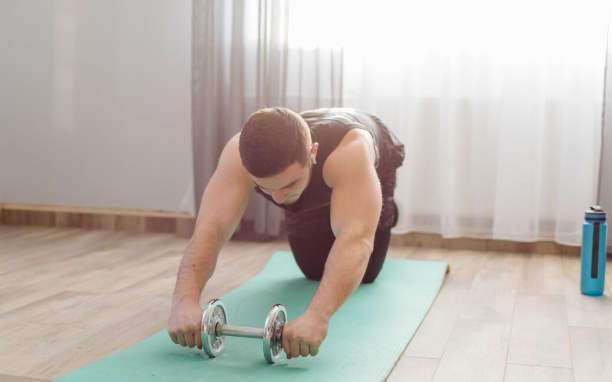
If a standard push-up is too challenging, begin with an incline push-up.
Place your hands on a stable elevated surface such as a sturdy bench or countertop. Keep your body in a straight line and lower your chest toward the surface.
As your strength improves, gradually use a lower surface before progressing to floor push-ups.
Standard Push-Up
- Place your hands slightly wider than shoulder width.
- Extend your legs behind you.
- Keep your body aligned.
- Bend your elbows and lower your body.
- Push through your hands to return to the starting position.
Start with a number of repetitions that you can perform with good form.
4. Glute Bridges
Glute bridges strengthen the muscles around the hips and back of the legs while requiring little equipment.
They are particularly useful for people who spend a lot of time sitting.
How to Perform a Glute Bridge
- Lie on your back.
- Bend your knees and place your feet flat on the floor.
- Keep your arms comfortably at your sides.
- Tighten your abdominal muscles.
- Press through your feet and raise your hips.
- Pause briefly at the top.
- Lower your hips slowly.
Perform approximately 10–15 controlled repetitions.
Making It More Challenging
As your strength improves, you can add resistance or progress toward single-leg variations. More difficult versions should not be necessary every day.
5. Planks
Planks are an effective way to train core stability without requiring movement through the spine.
How to Perform a Basic Plank
Start on your forearms and toes, or use your knees for an easier variation.
Keep:
- Your head in a neutral position
- Your shoulders stable
- Your hips controlled
- Your abdominal muscles engaged
Instead of holding the plank for as long as possible, focus on maintaining good technique.
Beginners can start with 15–30 seconds.
Why Core Stability Matters
A strong core supports many everyday activities and can help you maintain better control during other exercises.
If holding a full plank is difficult, use a modified version with your knees on the floor.
6. Bird Dog
The bird dog combines core stability, balance, and controlled movement.
How to Perform It
- Start on your hands and knees.
- Keep your back relatively neutral.
- Extend one arm forward.
- At the same time, extend the opposite leg backward.
- Pause briefly.
- Return to the starting position.
- Repeat on the opposite side.
Perform 6–10 controlled repetitions on each side.
The goal is not to lift your arm and leg as high as possible. Instead, focus on maintaining balance and keeping your torso stable.
Why It Works Well in a Daily Routine
Bird dogs are generally less demanding than heavy strength exercises and can be useful as part of a mobility or core routine.
7. Mobility and Stretching
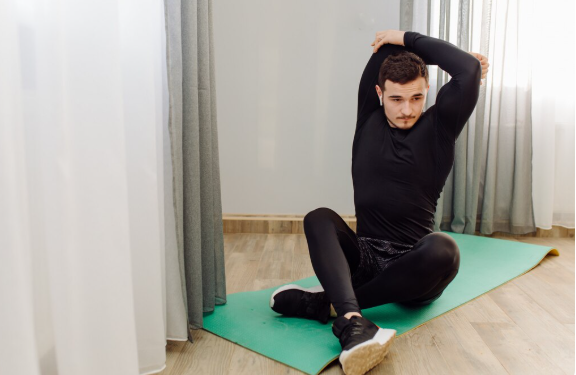
Mobility work can help you move through comfortable ranges of motion and counteract some of the stiffness associated with long periods of sitting.
A short daily mobility routine might include:
- Shoulder circles
- Gentle neck movements
- Hip rotations
- Ankle movements
- Hamstring stretches
- Calf stretches
- Chest-opening movements
- Gentle spinal mobility
Hold static stretches comfortably rather than forcing a joint into an extreme position.
How Long Should You Stretch?
A short five- to ten-minute session can be enough for a simple daily routine.
You can also incorporate mobility exercises into your warm-up and cool-down.
Should You Really Do All Seven Every Day?
Not necessarily.
The phrase “every day” should not mean performing every exercise at maximum effort every day.
Some movements, particularly light walking and mobility exercises, can be practiced frequently. More demanding strength exercises may benefit from alternating intensity and allowing muscles to recover.
For example, you could perform the full routine three or four days per week while using lighter movement on the other days.
Example Weekly Schedule
| Day | Main Focus |
|---|---|
| Monday | Full routine |
| Tuesday | Walking and mobility |
| Wednesday | Full routine |
| Thursday | Walking and gentle stretching |
| Friday | Full routine |
| Saturday | Walking and mobility |
| Sunday | Easy movement or rest |
This approach provides consistency without requiring intense training every day.
How to Create a 15-Minute Routine
If you have limited time, you can turn the exercises into a short circuit.
Try:
- Walk or march in place for 2 minutes.
- Perform 10 squats.
- Perform 5–10 push-ups.
- Perform 10 glute bridges.
- Hold a plank for 20 seconds.
- Perform 6 bird dogs per side.
- Finish with several minutes of mobility work.
Repeat selected exercises if you have more time.
The goal is to complete the movements with good technique rather than rushing through them.
How to Make the Routine Easier
Beginners should not feel pressured to perform advanced versions immediately.
You can make exercises easier by:
- Reducing repetitions
- Taking longer rest periods
- Using a chair for squats
- Performing incline push-ups
- Using knee-supported planks
- Moving more slowly
- Reducing the duration of walks
Consistency matters more than starting with a difficult routine.
How to Progress Over Time
Once the exercises become comfortable, increase the challenge gradually.
You can progress by:
- Adding repetitions
- Increasing walking time
- Increasing walking speed
- Adding resistance
- Improving movement control
- Increasing plank duration
- Using more advanced variations
Avoid changing everything at once.
A gradual approach allows you to identify what works well for your body and makes the routine easier to maintain.
Common Mistakes to Avoid
Doing Too Much Too Soon
Starting with a high-volume workout can leave you excessively sore and make it difficult to continue.
Begin with manageable amounts and gradually build up.
Ignoring Technique
More repetitions do not make an exercise better if your form deteriorates.
Quality should come before quantity.
Training Through Sharp Pain
Normal muscle effort and mild fatigue are different from sharp or unusual pain.
If an exercise causes significant pain, stop and reassess the movement rather than forcing more repetitions.
Skipping Recovery
Daily movement does not require daily high-intensity training.
Recovery days and lighter sessions can be an important part of a successful exercise routine.
Tips for Staying Consistent

The easiest exercise routine to maintain is one that fits naturally into your day.
Try exercising at the same time each day, such as:
- Immediately after waking
- During a lunch break
- After work
- Before an evening shower
- During a television break
You can also keep basic equipment visible and ready to use.
A resistance band, exercise mat, or comfortable pair of walking shoes can make it easier to start.
When to Modify Your Routine
Your exercise choices should match your fitness level, mobility, age, and individual circumstances.
If you have been inactive for a long time, start gradually. People with chronic health conditions, disabilities, or other concerns may benefit from discussing appropriate exercise levels with a qualified healthcare professional.
Older adults may also benefit from including balance-focused movements in addition to aerobic and strength activities.
Key Points to Remember
- Daily movement can support overall health and fitness.
- Walking is an accessible way to increase physical activity.
- Squats strengthen the lower body and support functional movement.
- Push-ups develop upper-body strength.
- Glute bridges target the hips and glutes.
- Planks build core stability.
- Bird dogs combine balance and controlled core movement.
- Mobility exercises can help maintain comfortable movement.
- Not every exercise needs to be performed intensely every day.
- Beginners should start with manageable repetitions and progress gradually.
- Good technique is more important than completing a large number of repetitions.
- Rest and lighter activity can be included in a daily movement routine.
Final Thoughts
A simple exercise routine can be an effective way to make movement a regular part of everyday life. Walking, squats, push-ups, glute bridges, planks, bird dogs, and mobility exercises cover several important areas of fitness without requiring an expensive gym or complicated equipment.
The key is consistency. You do not need to push yourself to exhaustion every day to benefit from regular movement. Some days can involve a short strength routine, while others can focus on walking and mobility.
Start at a level that feels manageable, concentrate on good technique, and gradually increase the challenge as your fitness improves. A sustainable routine is much more useful than an intense program that you cannot maintain.
Frequently Asked Questions
1. Is it okay to exercise every day?
Yes, daily movement can be beneficial, but the intensity should vary. Light walking and mobility work can be performed frequently, while demanding strength workouts should allow adequate recovery.
2. Can these exercises be done without equipment?
Yes. All seven movements can be performed with little or no equipment. A mat can make floor exercises more comfortable, but it is not essential.
3. How long should a daily exercise routine last?
A short 10–20 minute routine can be a useful starting point. You can gradually increase the duration as your fitness and schedule allow. Overall weekly activity is more important than making every individual session long.
4. Can these exercises help build strength?
Yes. Squats, push-ups, glute bridges, planks, and bird dogs can improve strength and stability, particularly for beginners. As you become stronger, progressive resistance can provide additional challenge.
5. Should I rest from exercise during the week?
Rest does not necessarily mean complete inactivity. You can use recovery days for gentle walking, stretching, or mobility work. More intense training should be balanced with adequate recovery.

One thought on “7 Exercises to Do Everyday for Strength, Mobility, and Fitness”